|
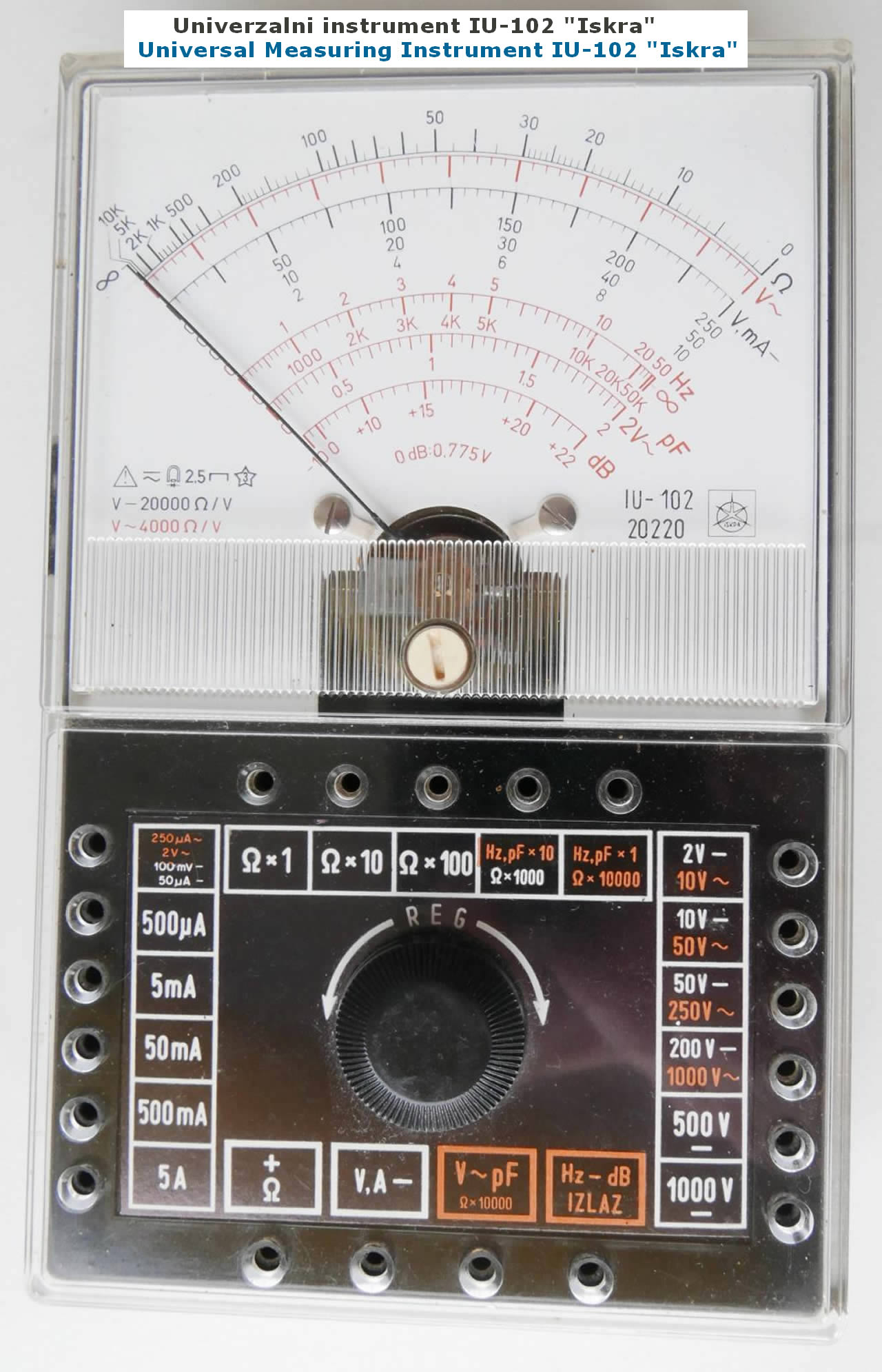
Iskra IU-102 Universal Measuring Instrument
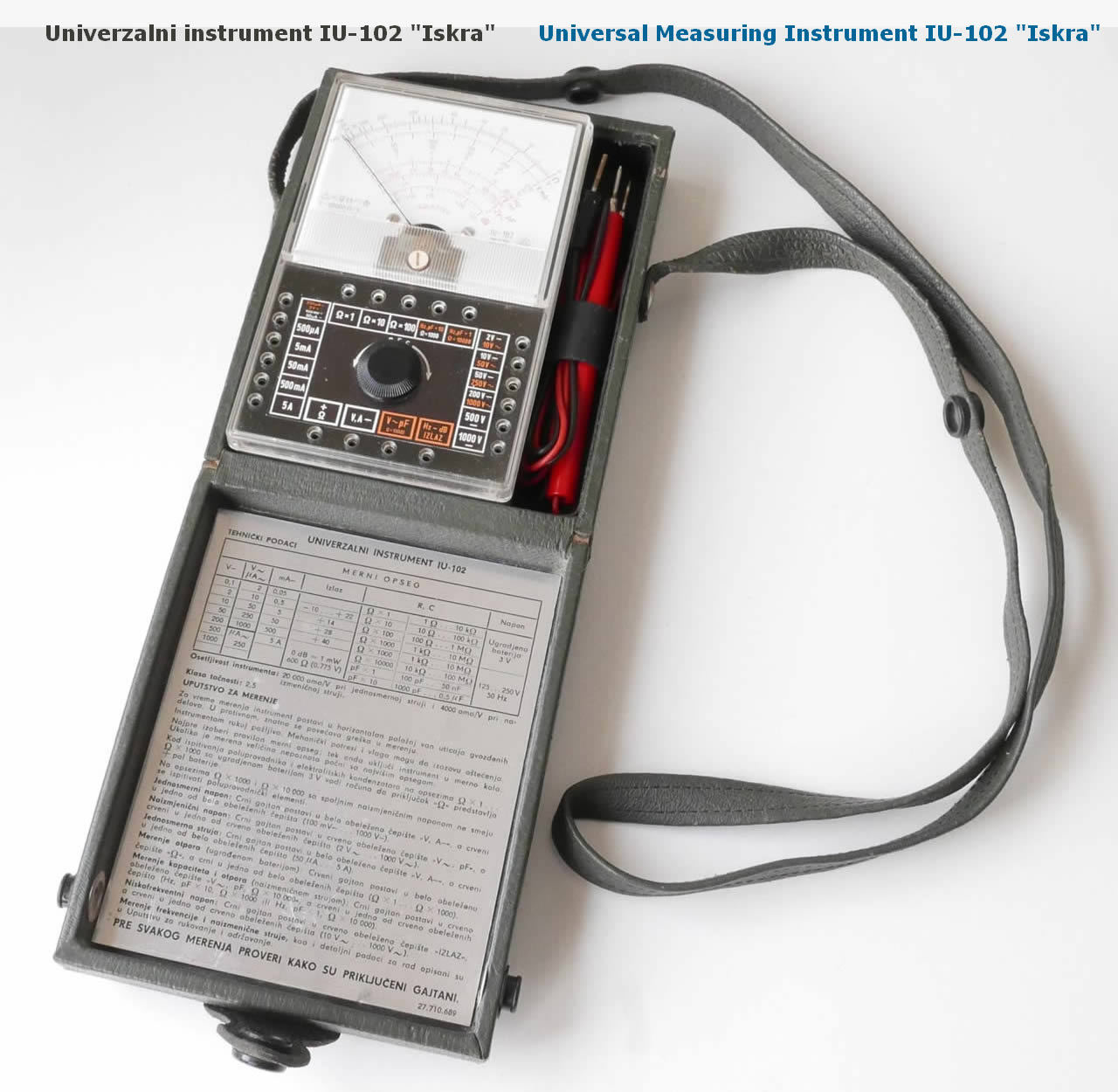
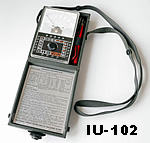 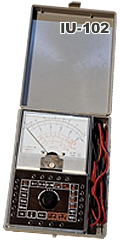 The Iskra IU-102 is a compact analog universal measuring instrument (multimeter) manufactured by Iskra in Kranj, Socialist Federal Republic of Yugoslavia (SFRY). It appeared in the late 1960s, and early versions of this instrument were also manufactured under the designation US6a.
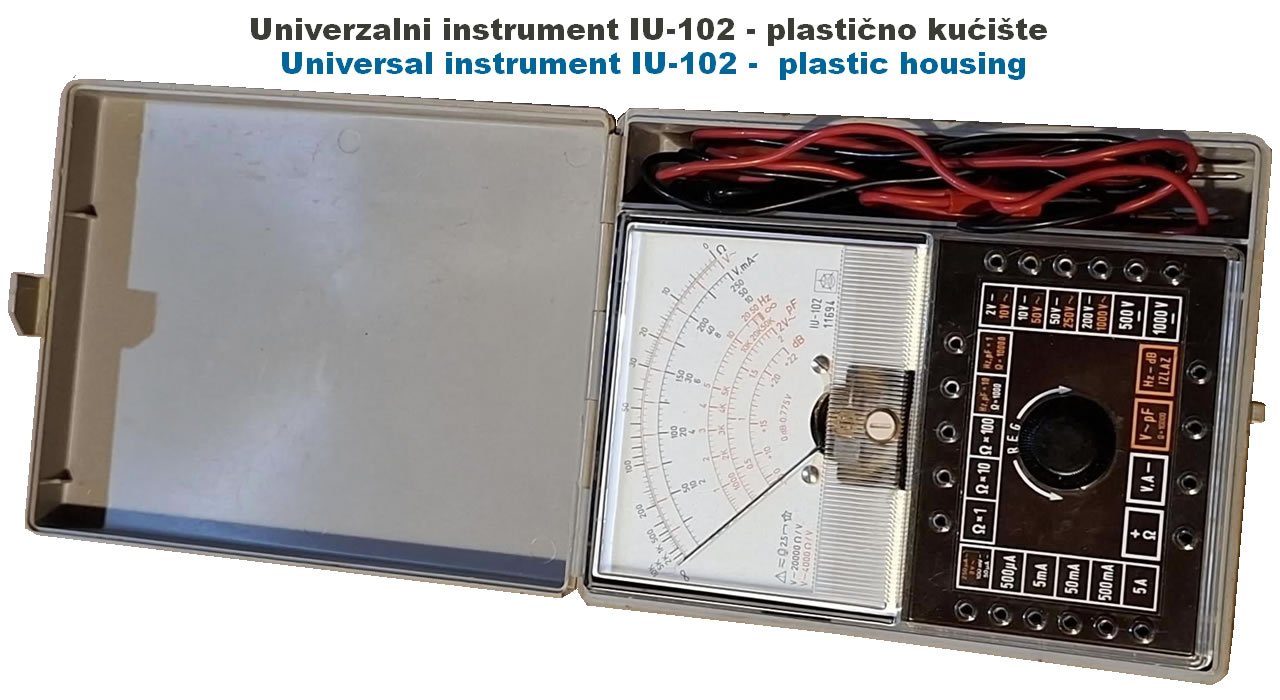
The instrument was manufactured in two versions. The first, intended for field use, was housed in a rugged, sturdy case covered in artificial leather and fitted with a carrying strap. The second version was housed in a plastic case.
The instrument was included in the communications mechanic's tool kit, which was used by field maintenance personnel for servicing and repairing communications equipment and systems. The IU-102 was also part of the standard test equipment in communications maintenance shops. The communications mechanic's tool kit was also included as part of the equipment supplied with more complex communications systems.
Basic Characteristics: Sensitivity: 20 kΩ/V for direct current (DC) voltage and 4 kΩ/V for alternating current (AC) voltage. Measurement Ranges:
- DC Voltage: 0.1–1000 V;
- AC Voltage: 2–1000 V;
 Current: 0.01–5000 mA; - Resistance: 1 Ω–100 MΩ;
- Capacitance: 100 pF–0.5 µF;
- Additional Functions: Decibels (dB) and frequency (Hz).
The measurement function and corresponding range were selected by plugging the test leads into the appropriate input jacks on the instrument.
Power Supply: The instrument operated on a 3 V battery, using a special Varta 3 V dry-cell battery. It could also be powered from a 220 V AC mains supply. Over time, production of the compatible battery was discontinued, making continued operation of the instrument more difficult. Together with the introduction of newer multimeters, this contributed to the gradual withdrawal of the IU-102 from service and its eventual retirement from use.
Country of Origin: Yugoslavia (Iskra, Kranj). |